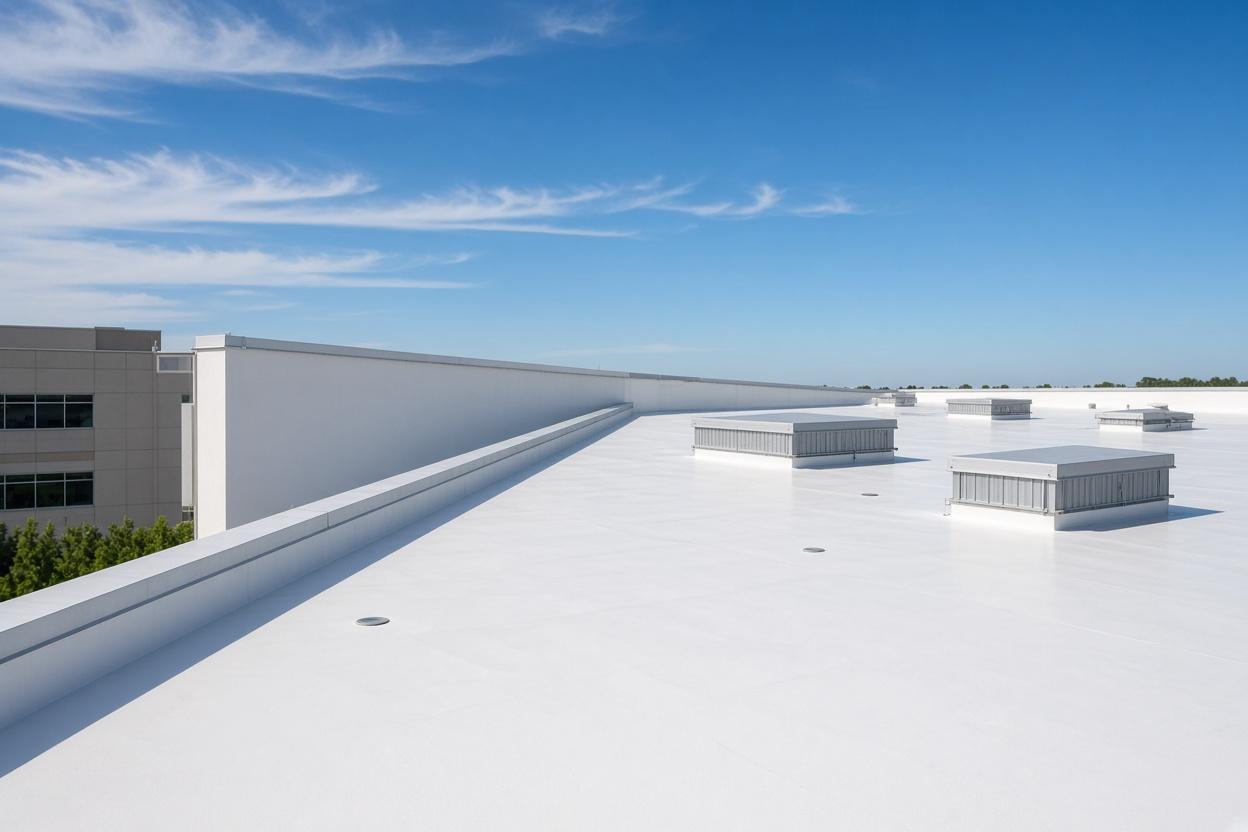
Flat Roof Ponding in Dallas: Causes, Damage, and Fixes
Ponding water is standing water that sits on a flat roof more than 48 hours after a storm. In Dallas, it is the most common flat roof problem we repair — and it is fixable without replacing the whole roof. StazOn has repaired ponding on TPO, EPDM, PVC, and modified bitumen roofs across DFW since 1980. For a free estimate, call 214-466-1518.
Request Your Free Estimate
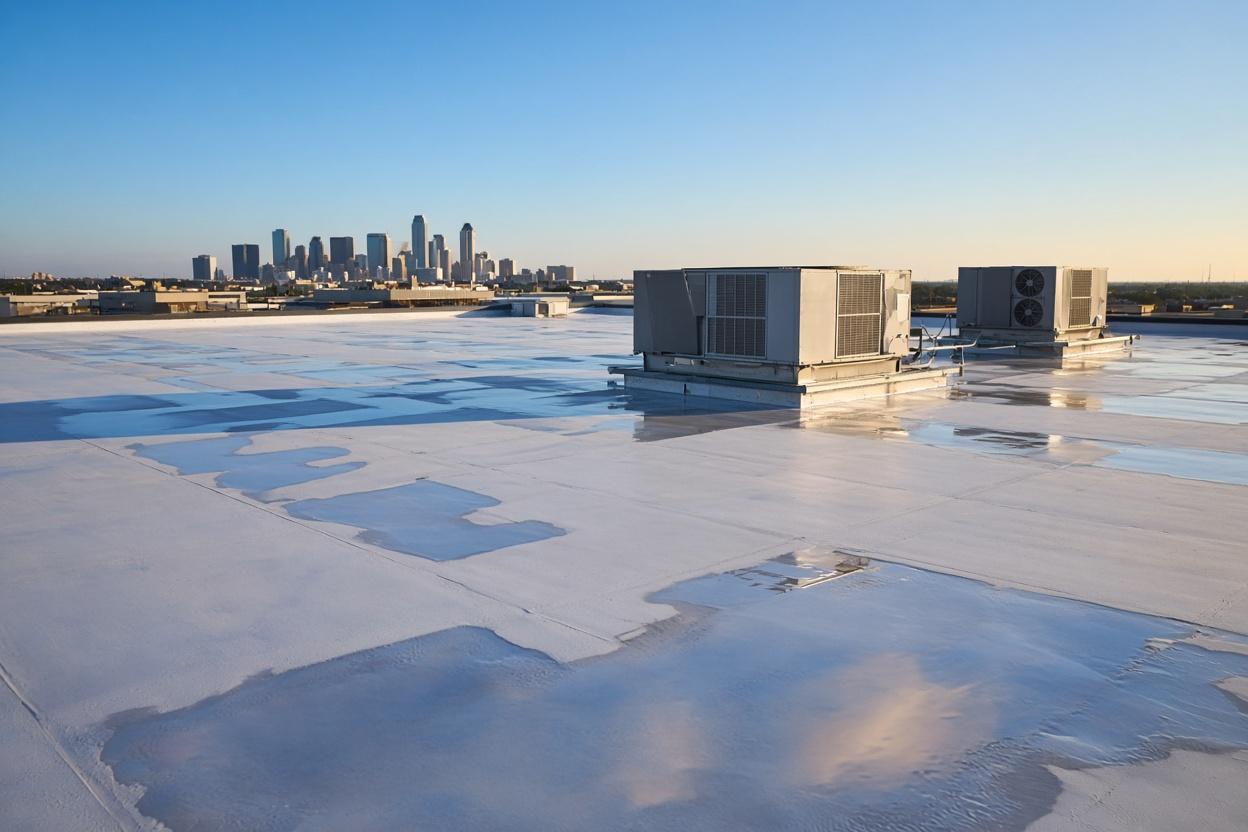
What Is Flat Roof Ponding and Why Does It Matter in Dallas?
Ponding happens when a flat roof has low spots, sagging decking, or blocked drains, so water has no path off the membrane.
- Low spots collect water after every storm and never fully dry out
- Blocked drains and scuppers back water up across the entire roof
- Sagging decking from a previous leak creates new valleys that hold water
- Dallas weather makes it worse — heavy downpours, freeze-thaw, and 100-degree sun
A small puddle seems harmless, but ponding is the number one cause of premature flat roof failure in North Texas. Every flat roof system in Dallas — TPO, EPDM, PVC, and modified bitumen — fails fastest where water sits.
How Long Can Water Sit on a Flat Roof Before It Causes Damage?
The industry rule of thumb is 48 hours. If water remains after two full days, the membrane is already under stress.
- 48 hours is the maximum most manufacturer warranties allow before damage starts
- 72 hours — plant growth, algae, and dirt begin feeding on the membrane
- Weeks of ponding — the membrane softens, blisters form, and leaks begin
- Year-round ponding — freeze-thaw cycles crack seams and flashings
The damage is not one big event. It is slow wear on the membrane, seams, and deck below. A flat roof repair in Dallas caught early costs hundreds of dollars; ignored ponding ends in a full replacement.
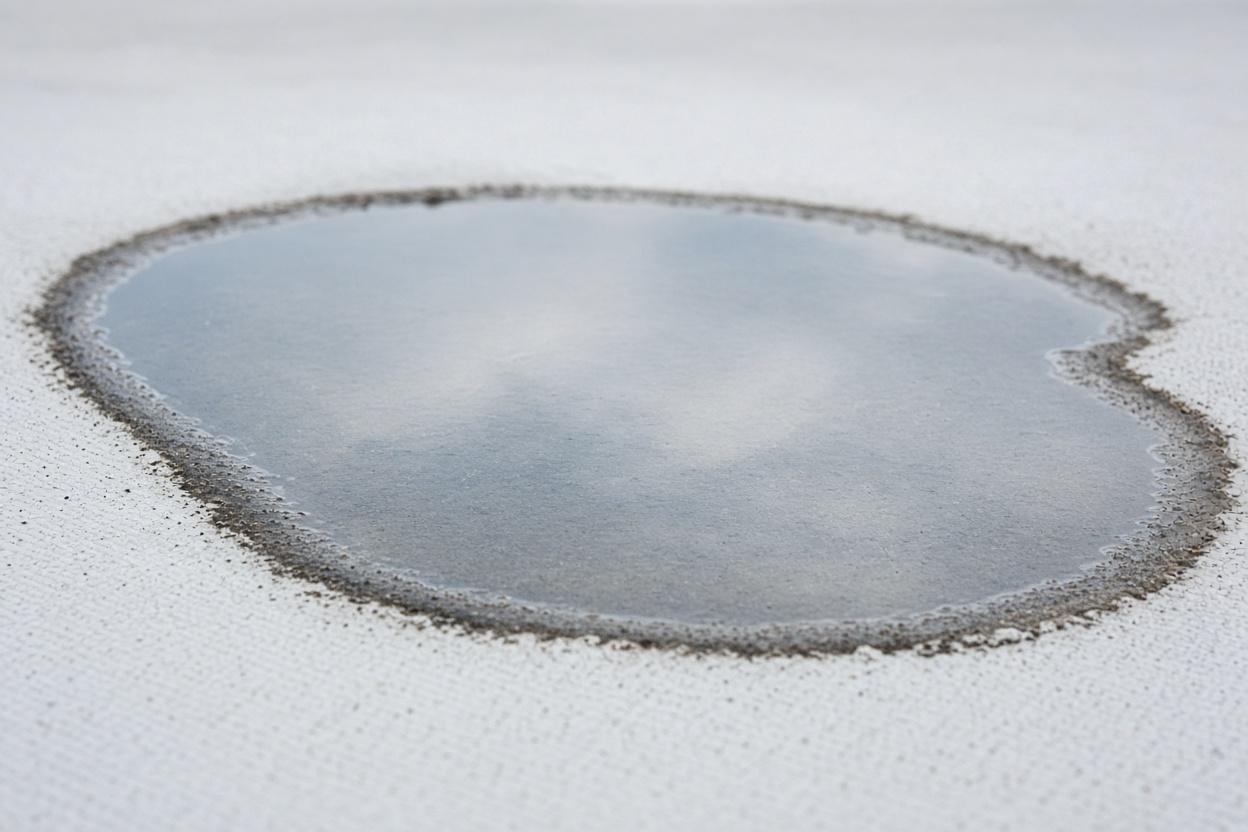
What Causes Ponding Water on Flat Roofs in Dallas?
Most ponding is a drainage problem, not a roof-covering problem.
- Insufficient slope — flat roofs should drain to a low point; many DFW roofs are dead flat
- Deflected decking — a steel or wood deck that bows under weight creates hidden valleys
- Clogged interior drains — leaves, insulation, and debris block the drain dome
- Settlement and movement — the building shifts and the roof no longer drains
- Rooftop equipment — HVAC units, curbs, and pipe supports block the flow of water
A commercial flat roof inspection in Dallas maps every low spot and drain. You need a roof map, not a guess, before you can fix the drainage.
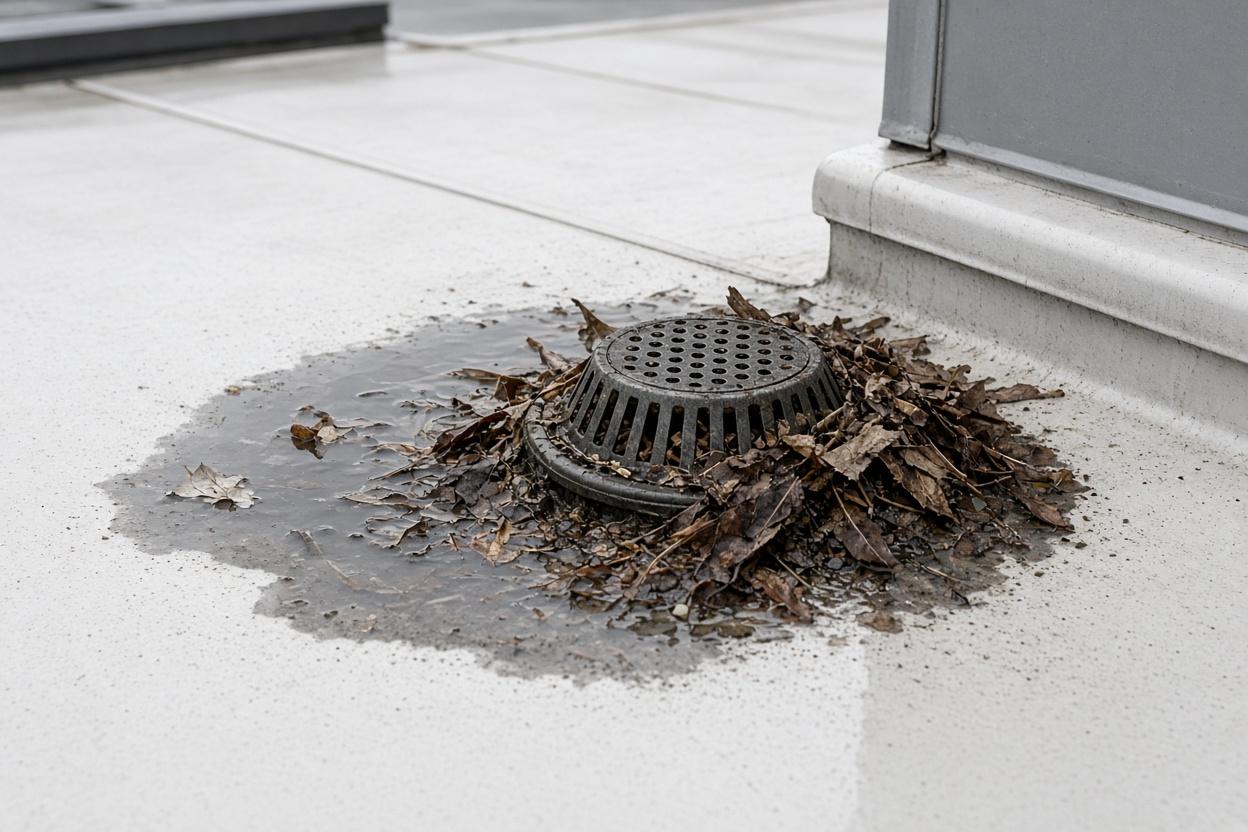
What Are the Signs of Ponding on a Commercial or Residential Flat Roof?
You do not need to climb the roof to know ponding is a problem.
- Visible puddles that remain days after rain — check from a window or drone
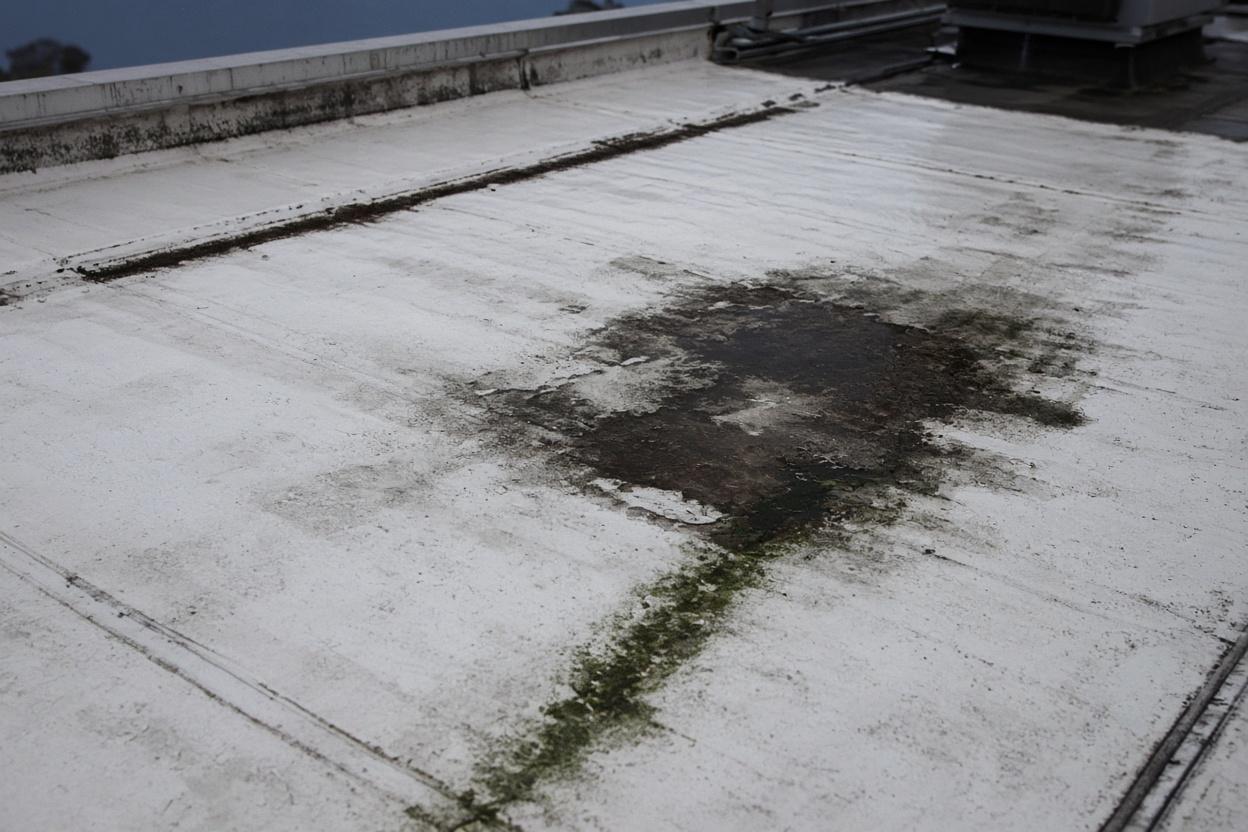
- Dark staining on the membrane where water repeatedly sits
- Algae, moss, or dirt lines at the water level
- Blistering or fish-mouth seams on TPO and PVC membranes
- Interior water stains on the ceiling below the low spot
If you can see the roof from an upstairs window or a commercial neighbor, look after the next storm. Water pooled in the same spot 48 hours later means you have flat roof ponding that needs attention.
Does Ponding Water Damage a TPO, EPDM, or PVC Membrane?
Yes. Every single-ply membrane has a different failure mode, but standing water attacks all of them.
- TPO — ponding softens the membrane and accelerates seam failure; heat-reflective TPO loses its cooling value under a dark puddle
- EPDM rubber — water breeds algae and fungus that degrade the rubber over time
- PVC — plasticizers leach out in standing water, making the membrane stiff and brittle
- Modified bitumen — ponding causes the surface to alligator and the plies to delaminate
Each flat roof membrane option in Dallas has its own repair method — the right fix starts with the right diagnosis.
How Do You Fix Flat Roof Ponding in Dallas?
The fix depends on the cause, and there are four proven corrections:
- Clear the drains — the cheapest fix; remove the dome, clean the strainer, snake the pipe
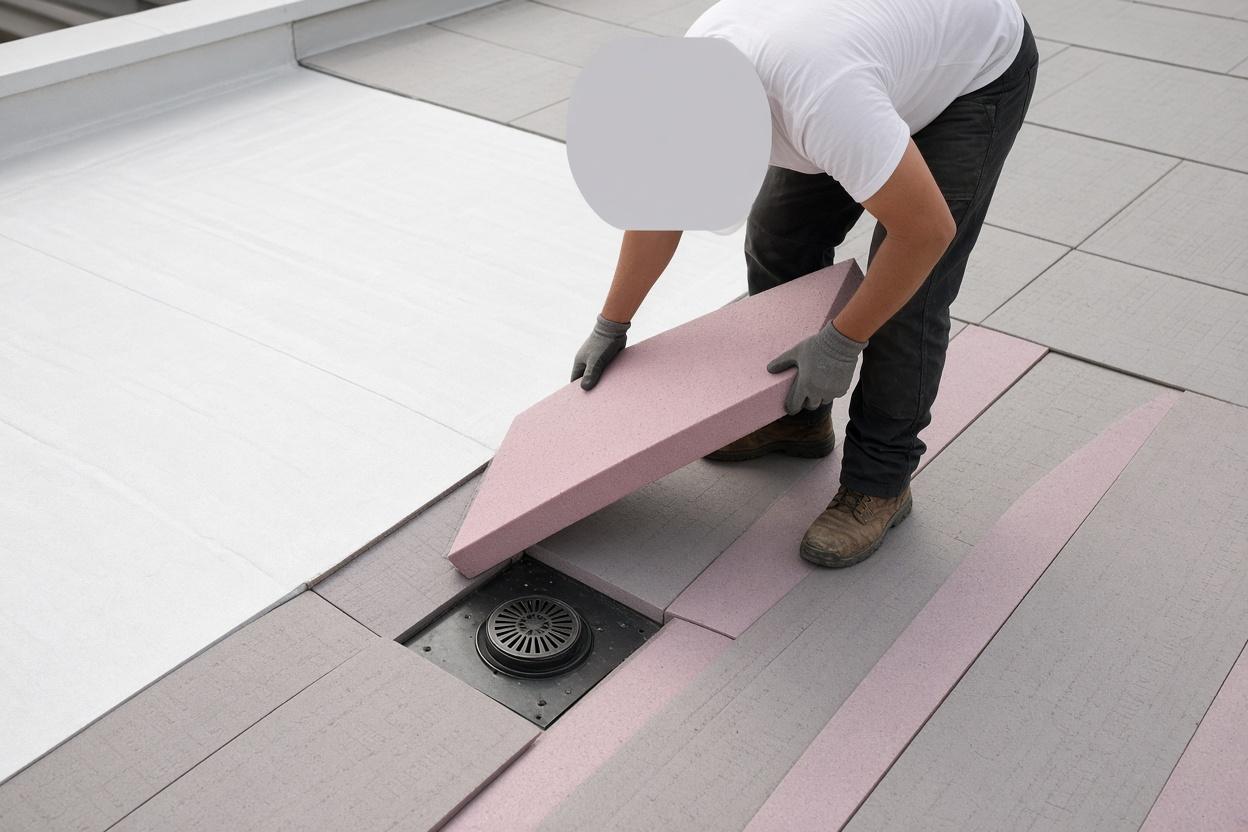
- Install crickets — tapered wood or foam structures that channel water around rooftop equipment to the drains
- Add tapered insulation — re-slope the roof during a partial or full re-cover so water runs to the low points
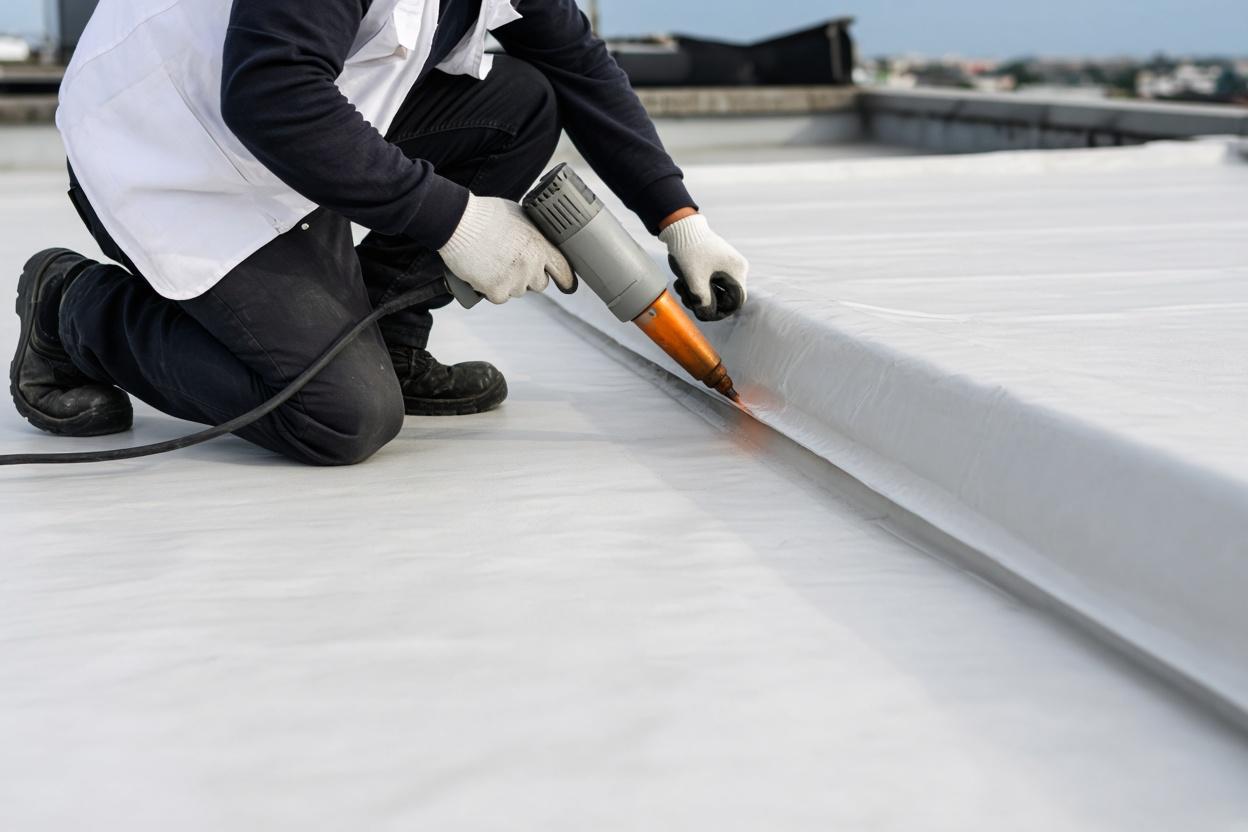
- Repair or replace the membrane at low spots — patch blistered areas, re-seal seams, and coat the ponding zones
For most DFW buildings, crickets and tapered insulation solve ponding permanently without a full tear-off. It is a flat roof repair cost in Dallas that pays for itself the first time it keeps water off the membrane.
How Much Does It Cost to Fix Ponding on a Flat Roof?
Costs in Dallas range from a few hundred dollars for drain cleaning to several thousand for re-sloping.
- Drain cleaning and debris removal — $150 to $400 per drain
- Ponding repairs and seam resealing — $500 to $1,500 per affected area
- Cricket installation — $500 to $2,000 depending on size and location
- Tapered insulation re-slope — $2 to $4 per square foot on re-cover projects
- Full flat roof replacement — the result of years of ignored ponding, from $8,000 up
Every low spot is unique, so honest numbers require a site visit. StazOn gives free written estimates — call 214-466-1518 and we will map the roof and price the fix.
Why Dallas Homeowners Choose StazOn Since 1980
- GAF Master Elite Contractor — only 2% of roofing contractors qualify nationwide
- 45+ years serving Dallas and Fort Worth — family owned and operated since 1980
- Full-spectrum roofing — residential, commercial, and multi-family flat roofs
- A+ BBB Accredited with thousands of completed DFW projects
- FREE Estimates — no obligation, no pressure, written in plain English
Call 214-466-1518.
How Do I Prevent Ponding Water on My Flat Roof?
Keep Drains Clear
Inspect Twice a Year
Look After Every Storm
Document Low Spots
What Is Involved in a Professional Ponding Repair?
A professional repair follows a process, not a quick patch.
- Inspection and drain map — locate every low spot, blocked drain, and seam stress point
- Drainage corrections — clean drains, then install crickets or tapered insulation where water collects
- Membrane work — re-seal seams, patch blisters, and coat ponding zones
- Verification — we re-check after the next rain that all water drains within 48 hours
That last step matters: a ponding “fix” never re-verified is just a guess. We confirm the roof drains before calling the job done.