
How Much Does a Tile Roof Weigh?
Tile roofs are heavy by design, and knowing the real weight matters long before the first tile goes down. Clay tile runs about 600 to 1,100 pounds per square, concrete tile about 900 to 1,200 pounds per square — several times heavier than the asphalt shingle roof you may be replacing. That extra load decides whether your Dallas home’s framing needs reinforcement, which underlayment and fasteners to use, and what your roof replacement actually costs. StazOn Roofing, a GAF Master Elite contractor serving Dallas–Fort Worth since 1980, measures the true load on every tile job so your new roof is both beautiful and structurally sound. Call 214-466-1518 for a free tile roof estimate.
Request Your Free Estimate
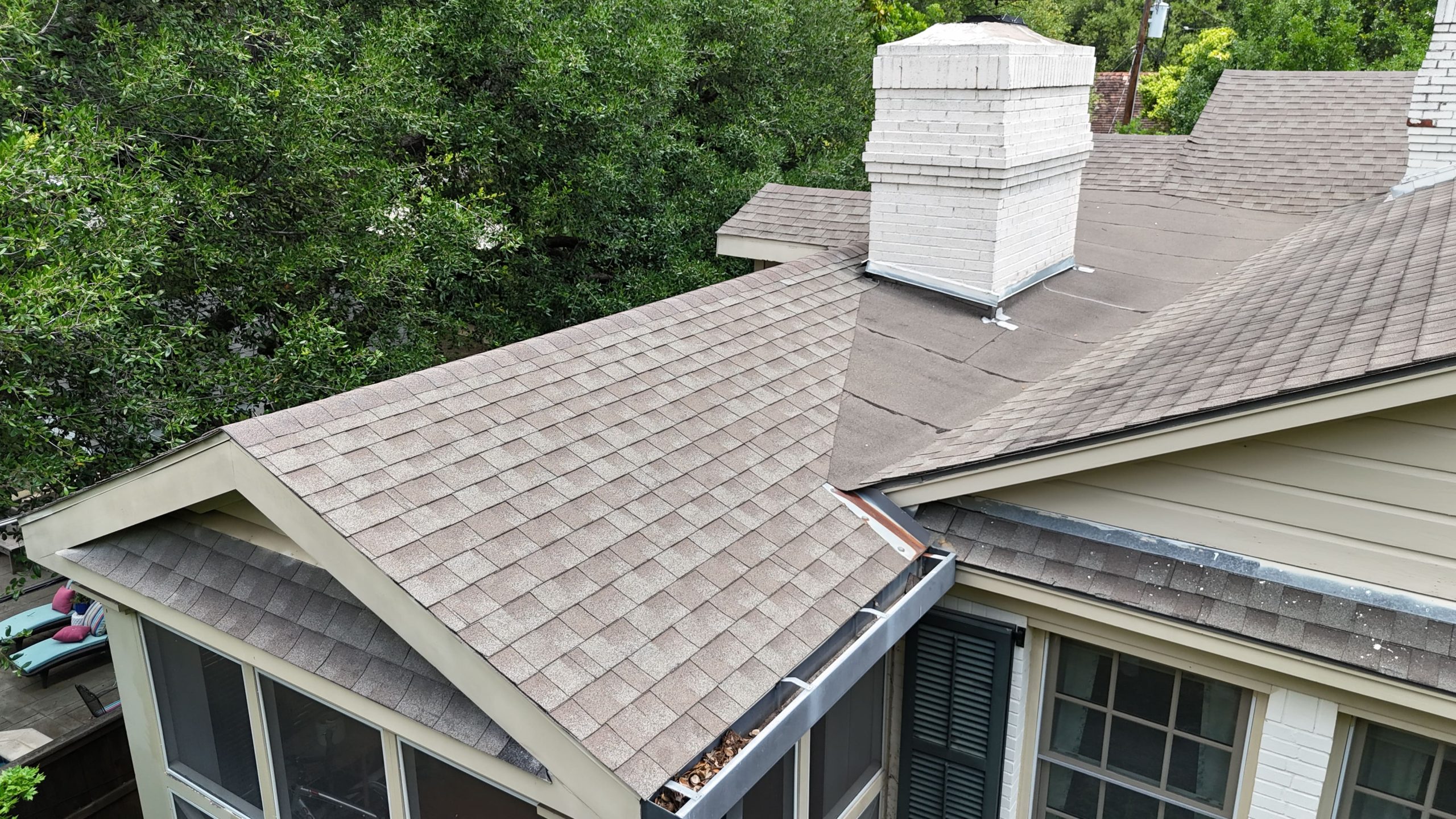
How much does a tile roof weigh per square?
A roofing “square” is 100 square feet, and a tile roof’s weight is quoted per square because that is how it is priced and engineered. Actual numbers vary by tile type and profile, but these are the ranges a Dallas homeowner can expect from a certified tile installer:
- Clay barrel tile — 600 to 1,100 pounds per square, depending on profile and thickness
- Concrete barrel tile — 900 to 1,200 pounds per square, the heaviest common option
- Flat or mission-style clay — 500 to 900 pounds per square, slightly lighter but still substantial
- Interlocking lightweight concrete — 450 to 700 pounds per square, the best fit for bungalows and older frames
Compare that with asphalt shingles, which typically weigh 200 to 300 pounds per square. The jump is why tile roofing weight is the first question to answer before you commit.
Is my Dallas home's roof structure strong enough for tile?
Most homes built with asphalt shingles are not automatically rated for a full clay or concrete tile load. Many Dallas-area roofs are framed to a 10 psf (pounds per square foot) dead-load capacity, while a clay tile roof can demand 20 to 25 psf. That gap usually means one of three things:
- Reinforcement needed — added trusses, sistered joists, or engineered sheathing to carry the extra weight
- Lightweight tile instead — an interlocking concrete or synthetic product engineered to sit within the existing capacity
- Approved as-is — newer or steel-framed structures that already meet the tile load requirement
A licensed structural assessment tells you which path applies. StazOn never assumes the frame can carry the load — we verify it, because a loaded roof that is under-framed is the most expensive mistake in tile roofing.

How does tile weight compare to asphalt shingle weight?
The difference is roughly three to six times. Asphalt shingles run 200 to 300 pounds per square and spread load well because they are nailed flat and light. Clay and concrete tile sit heavier per square, and that weight concentrates at the hips, ridges, and rakes as well as in every field tile. For a Dallas homeowner switching materials, the practical effect is clear:
- Steeper structure demands — more framing, better sheathing, and engineered attachment points
- A different underlayment — tile needs a breathable membrane installed to manufacturer spec
- Higher labor intensity — tile is laid one piece at a time, not rolled out in courses
If you are weighing tile against staying with asphalt on your next roof replacement, the weight comparison is the deciding factor — and it is exactly what StazOn calculates on the first visit.

Does tile weight affect installation cost?
Yes — plainly. Heavier tile means more handling labor, more crew time, and often more reinforcement before a single tile is set. Those costs show up in three places:
- Structural work — truss reinforcement or sheathing upgrades if the frame needs help
- Materials — heavier tile, specialty underlayment, and engineered fasteners
- Labor — one-piece installation is slower than rolled courses, and tile is heavier to haul up
That is why a budget estimate for tile roof replacement in Dallas needs an on-roof inspection, not a phone quote — the weight story is different on every home. StazOn gives you a written scope that itemizes any structural work before you commit, so the number you approve is the number you pay.
Clay vs concrete tile: which is heavier?
Concrete tile is the heavier of the two, and the difference is real. Concrete runs about 900 to 1,200 pounds per square, while fired clay sits lower at 600 to 1,100 pounds per square depending on profile and manufacturing density. What most Dallas homeowners care about is not just the raw number but what it means to live with:
- Concrete — denser, heavier, and very durable in hail, but demands the most structural capacity
- Clay — classic terracotta look, a little lighter, still a significant load
- Lightweight concrete — the modern compromise that hits tile aesthetics at an asphalt-compatible load
If you already know you want the tile look, the weight conversation is really a conversation about your roof replacement budget and your home’s structure — StazOn lines those up before pricing the tile.
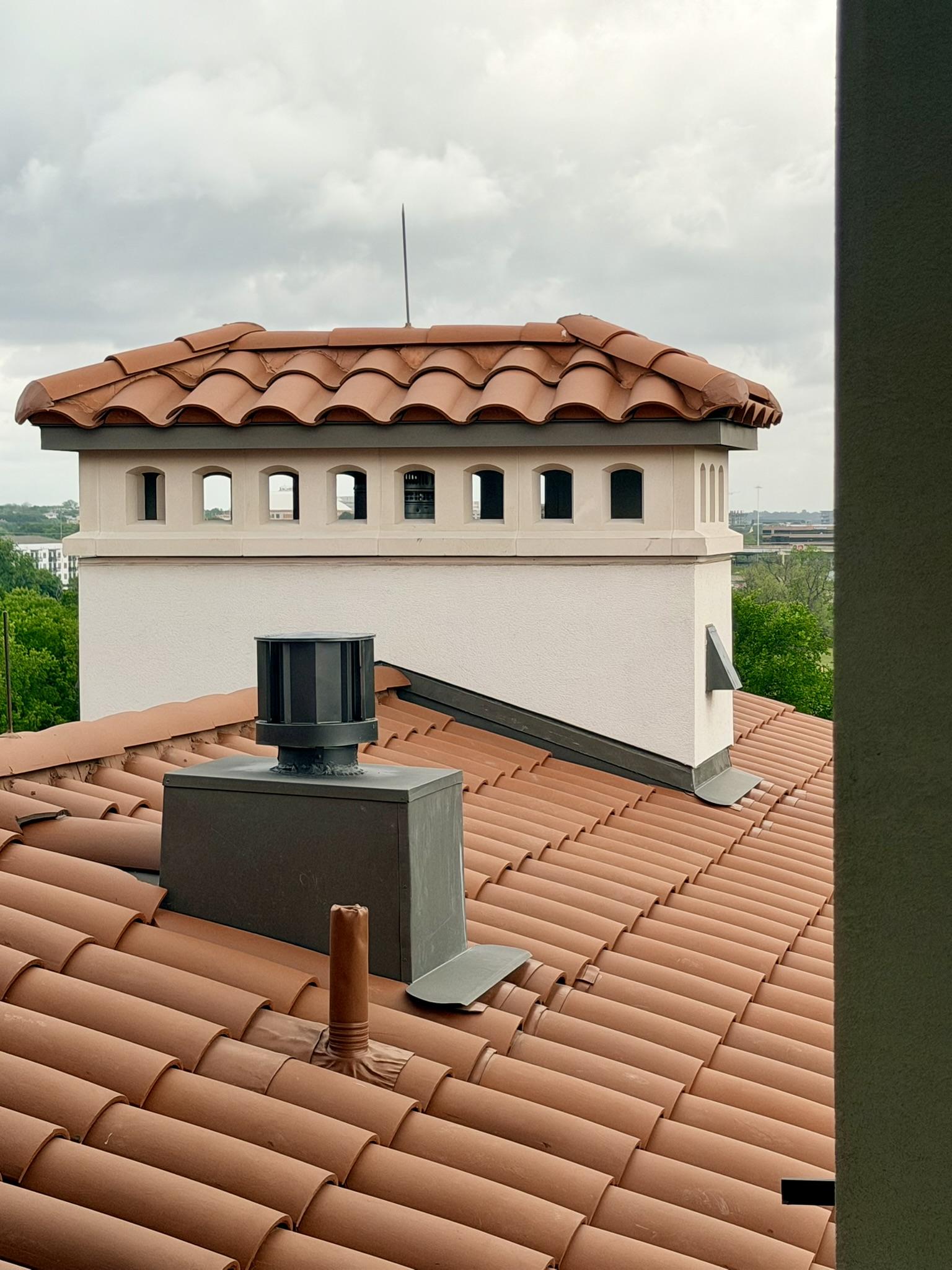

Why does tile weight matter for your roof framing?
Every roof is engineered for a maximum live + dead load. Dead load is the permanent weight of the roof itself — and tile, especially clay or concrete, is a heavy dead load. When the deck, trusses, and walls are not built for it, the added weight over time can cause sagging rooflines, cracked walls, or in the worst cases, structural failure. That is why responsible tile installation starts with math:
- Dead load audit — confirm the framing handles the tile weight you are choosing
- Reinforcement plan — add strength where the audit shows it is short
- Pro-rated roof design — hip and ridge details that distribute weight instead of concentrating it
Warning signs of an under-framed roof include visible roof sag or cracked interior walls. If you see either, have the structure assessed before adding heavy tile on top.
Does barrel tile weigh more than flat tile?
Profile matters about as much as material. A rounded barrel (S-shape / mission) tile carries more material per square than a flatter profile, so it weighs more per square foot than a low-profile flat tile of the same material. The practical difference:
- Barrel tile — heavier, taller profile, classic Spanish look, higher load
- Flat and shake-style tile — lower profile, marginally lighter, cleaner modern lines
For most homes the material (clay vs concrete) moves the needle more than the profile. Get the actual per-square weight from the manufacturer spec and let StazOn translate that into a structure recommendation — then compare it against the full Tile Roofing Dallas Guide.
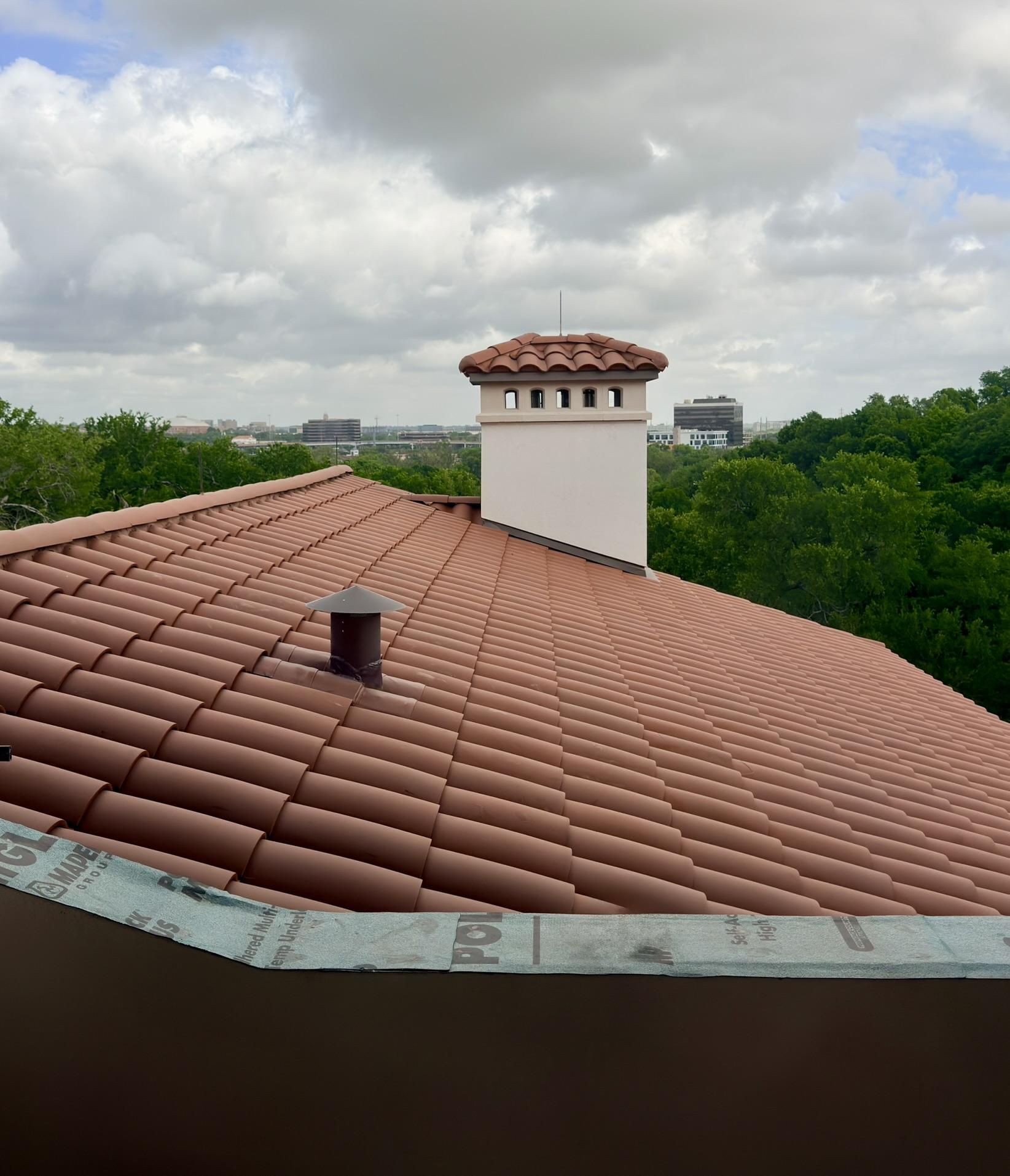

When is lightweight concrete tile the right answer?
Lightweight interlocking concrete tile is the tile option that most Dallas bungalows and ranch homes can carry without heavy reinforcement. At about 450 to 700 pounds per square, it lands much closer to the asphalt load most roofs were built for while still delivering the tile silhouette, color, and curb appeal:
- Best on older frames — fits within existing capacity more often than clay
- Lower reinforcement cost — less structural work means a lower total project price
- Still a real tile — concrete durability, hail resistance, and a tile look
If structure is your limiter, lightweight concrete is frequently the reason a tile roof is doable at all. StazOn picks the tile class to match your home first, then the color and profile second. Call 214-466-1518 to talk through which tile your frame can carry.
How does tile weight shape a proper tile roof installation?
Underlayment Load
Tile sits on a breathable membrane engineered to shed water and tolerate the weight above it. The membrane must be installed to the tile manufacturer’s spec — a detail that protects the deck and the interior below it.
Hip & Ridge Reinforcements
Weight concentrates at hips and ridges. A certified installer reinforces these junctions so they carry the tile load and stay watertight for decades, not just the first season.
Fastening & Miters
Heavy tile needs proper attachment at the field, rake, and eave. Screws, clips, and clips must hold against DFW wind — a failed fastening plan is how tiles end up in the yard after a storm.
Live-Load Headroom
Beyond tile weight, your roof carries live loads from Texas hail, wind, and anyone walking it. A certified installer keeps enough headroom in the structure to handle both, so you are not relying on the frame being right at its limit.
Why choose StazOn for a heavy tile roof in Dallas?
Tile roofing is not a one-size job, and roof weight makes it a structural one. StazOn Roofing has installed tile across Dallas–Fort Worth since 1980, and we treat the weight question as crucial — not an afterthought. What you get:
- GAF Master Elite contractor — in the top 2% of roofing contractors nationwide
- Structural-first approach — we verify the frame can carry the tile before we price it
- 45+ years, family owned — we will be here for your warranty and any claims
- A+ BBB accredited — a documented record across thousands of completed projects
- FREE estimate — on-roof inspection, written scope, no obligation
Call 214-466-1518 today for your free tile roof estimate, or explore your material choices in tile roofing options in Dallas.
FAQ
How much does a clay tile roof weigh?
A: Fired clay tile typically weighs 600 to 1,100 pounds per square (100 sq. ft.), depending on profile and density. Barrel profiles sit at the higher end of that range. Call StazOn at 214-466-1518 to confirm the exact spec for the tile you want.
Can my existing roof support tile weight?
A: Only a structural assessment can answer that. Most asphalt-built frames are rated around 10 psf dead load, while clay tile needs 20 to 25 psf. If the audit shows a shortfall, reinforcement or lightweight tile is the fix. StazOn performs this check before quoting tile.
Is concrete tile heavier than clay tile?
A: Yes. Concrete tile runs about 900 to 1,200 pounds per square, heavier than clay’s 600 to 1,100. Lightweight interlocking concrete (450 to 700 psf equivalent) is the option that fits more existing Dallas frames.
Does tile roof weight increase replacement cost?
A: Generally yes — heavier tile means structural reinforcement, specialty underlayment, and more labor. The exact add-on depends on your home. StazOn itemizes any structural work in your written estimate so the quoted number is the real one. Call 214-466-1518.
How much does a tile roof weigh per square foot?
A: A tile roof weighs roughly 6 to 12 pounds per square foot of installed roof, versus 2 to 3 pounds for asphalt shingles. Engineers quote per square (100 sq. ft.), so a clay system lands near 600 to 1,100 pounds per square.
Do I need a structural engineer before installing tile?
A: In most cases a licensure-level load review is required or strongly advised before heavy tile goes down. StazOn coordinates the structural assessment so you get one clear, Go/No-Go answer and a plan — no separate contractor wrangling.