How Heat Actually Damages Your Roof
Most homeowners think roof damage comes from storms. In Texas, heat is the silent killer that weakens the roof before the storm ever arrives. Three mechanisms work together:
1. UV Radiation Breakdown
Ultraviolet radiation from the Texas sun doesn’t just warm your roof — it chemically breaks down the asphalt in shingles. Asphalt is a petroleum product, and UV exposure causes photo-oxidation: the long hydrocarbon chains that give asphalt its flexibility and waterproofing properties fracture into shorter, brittle chains.
The visible result is granule loss. Roofing granules are ceramic-coated crushed stone embedded in the asphalt layer. As the asphalt binder degrades, granules release and wash into gutters. Once granules are gone, the underlying asphalt is exposed to direct UV — accelerating the death spiral.
2. Thermal Expansion and Contraction
Dallas roofs experience thermal shock daily in summer. A roof that’s 160°F at 4 PM cools to 80°F by midnight — an 80°F swing. Multiply that by 100+ summer days per year, and the expansion-contraction cycles number in the thousands over a roof’s life.
Different materials expand at different rates:
- Asphalt shingles: expand and contract
- Metal flashing, nail heads, and vent pipes: expand and contract at different rates
- Roof decking (plywood/OSB): expands and contracts at yet another rate
Where these materials meet — at flashing, at nails, at seams — the differential movement works fasteners loose, cracks sealants, and opens water-entry points. A roof that was watertight in May can develop a dozen micro-leaks by September from thermal cycling alone.
3. Attic Heat Buildup and Superheating
An unventilated or poorly ventilated attic in a Dallas summer becomes a convection oven. Attic temperatures exceed 150°F routinely. That heat radiates downward through insulation into living space (increasing AC load) and upward through the roof deck into the shingles (cooking them from below).
This two-sided heating — sun on top, attic heat on bottom — is unique to hot climates. Shingles are tested for top-down UV exposure; they’re not tested for being baked from both sides simultaneously. The result is accelerated aging that manufacturers’ warranties don’t account for.
Research from the Oak Ridge National Laboratory confirms: shingle temperature increases by roughly 1°F for every 1°F increase in attic air temperature. An attic that’s 30°F hotter bakes shingles 30°F hotter — and every 10°F increase roughly doubles the rate of chemical degradation.
The Numbers: How Much Faster Do Roofs Age in Texas?
A 30-year architectural shingle in a moderate climate like the Northeast typically delivers 25-28 years of service. In DFW, that same shingle typically lasts 15-20 years — a 30-40% reduction in service life.
The math on roof replacement in Dallas gets harsher when you calculate cost per year:
- Northern climate: $12,000 roof ÷ 27 years = $444/year
- Dallas climate: $12,000 roof ÷ 18 years = $667/year
That’s a 50% higher annual cost purely from accelerated aging. Over a 30-year mortgage, the Dallas homeowner replaces the roof twice while the northern homeowner replaces it once.
Signs Heat Is Aging Your Roof Faster Than Normal
Look for these heat-specific warning signs between professional inspections:
- Granules in gutters: A new roof sheds some granules in the first year. After that, granule accumulation in gutters means UV has degraded the asphalt binder. Check downspout splash blocks — granule piles there are the easiest spot to monitor.
- Curling shingle edges: Heat causes the asphalt to shrink, pulling shingle edges upward. Curling starts at eaves and rakes where thermal exposure is highest.
- Blistering: Small bubbles or raised spots on shingle surfaces. These are pockets where trapped moisture in the asphalt expanded under heat and created a void. Blisters eventually pop, exposing bare asphalt.
- Bald spots: Areas where granules are completely gone, leaving smooth black asphalt visible. These spots absorb heat faster, creating hot spots that accelerate surrounding degradation.
- Cracked sealant at penetrations: Walk around your house and look up at pipe boots, vent flashings, and chimney flashing. Cracked, peeling, or missing sealant is the #1 sign of thermal cycling damage.
- Wavy or buckled roof deck: Visible from the street as a rippled appearance. The decking expanded and buckled against fasteners. This is structural — it requires deck replacement, not just new shingles.
If you see 3+ of these signs, call the experts at StazOn Roofing Dallas for a FREE inspection. Call 214-466-1518.
Attic Ventilation: The #1 Defense Against Heat Aging
If your roof has a single defense against Texas heat aging, it’s attic ventilation. A properly balanced ventilation system pulls cooler outside air in through soffit vents (intake) and exhausts superheated air out through ridge vents, turbines, or powered fans (exhaust).
The standard is 1 square foot of net free vent area per 150 square feet of attic floor space, split 50/50 between intake and exhaust. In Texas, many roofing contractors in Dallas recommend upgrading to 1:300 (more ventilation) because of the extreme heat load.
Warning signs of poor attic ventilation:
- Attic feels like a sauna when you open the access hatch (should be no more than 10-15°F above outdoor temperature with proper ventilation)
- Air conditioning runs constantly and can’t keep up on hot days
- Ice dams in winter (rare in Texas but possible on north-facing slopes)
- Rust on metal components in the attic — nails, strap ties, HVAC ducts
- Visible mold or mildew on roof sheathing (moisture trapped by inadequate airflow)
A roof inspection in Dallas that includes attic ventilation assessment costs nothing with StazOn and can add years to your roof’s life.
Roofing Materials That Handle Texas Heat Better
Not all roofing materials suffer equally from DFW heat. If you’re planning a
roof replacement in Dallas,
consider these heat-resistant options:
| Material | Heat Resistance | Lifespan in DFW | Notes |
|---|---|---|---|
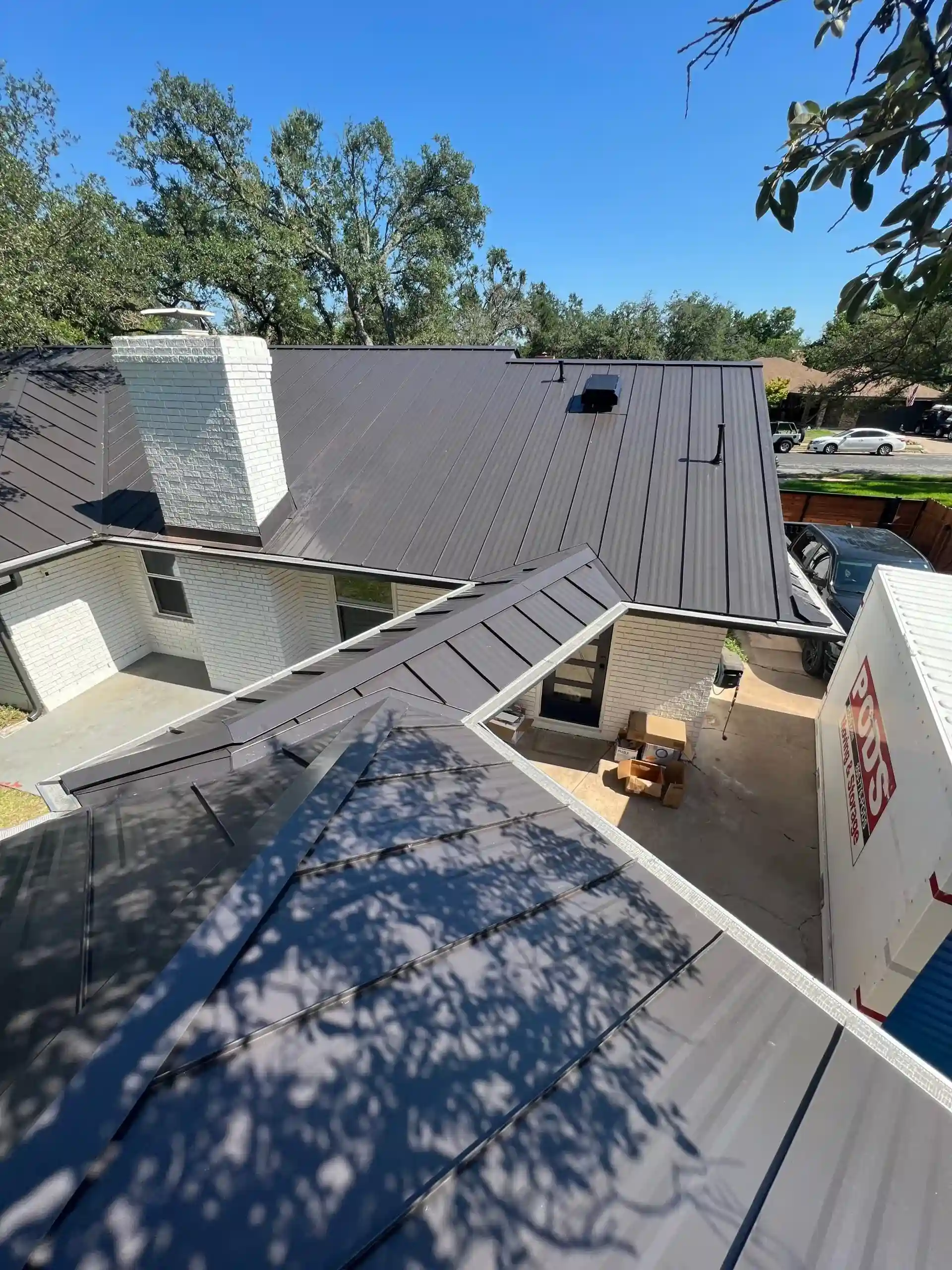
| Metal roofing | Excellent | 40-70 years | Reflects solar radiation. Cool-roof coatings reflect 70%+ of solar energy. |
| Clay/concrete tile | Excellent | 50-100 years | Thermal mass absorbs heat without degrading. Air gap between tile and deck provides natural ventilation. |
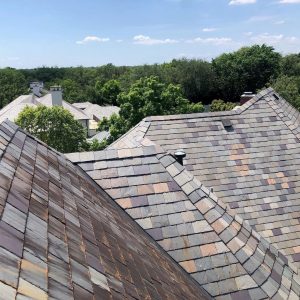
| Slate | Excellent | 75-200 years | Natural stone impervious to UV. High thermal mass. |
| TPO membrane (white) | Very good | 20-30 years | White surface reflects heat. Designed for flat/low-slope commercial but increasingly used on residential. |
| Architectural asphalt shingles | Moderate | 15-20 years | Better than 3-tab. Look for SBS-modified asphalt for improved thermal performance. |
| 3-tab asphalt shingles | Poor | 10-15 years | Thin, less asphalt content. Avoid in DFW unless budget-constrained. |
For most DFW homeowners, metal roofing in Dallas offers the best balance of heat resistance, longevity, and cost. It reflects rather than absorbs solar radiation, doesn’t degrade from UV exposure, and handles thermal expansion through integrated fastening systems.
What Homeowners Can Do Right Now
While you can’t change the Texas sun, you can slow heat-related roof aging:
1. Get a professional roof inspection — StazOn provides FREE inspections with attic ventilation assessment. Call 214-466-1518.
2. Upgrade attic ventilation — Ridge vents paired with continuous soffit vents. Powered attic fans as a supplement. Cost: $500-$1,500. Return: 3-7 extra years of roof life.
3. Add radiant barrier — Aluminum-faced sheathing or foil stapled to rafter undersides reflects radiant heat back out. Reduces attic temperatures by 20-30°F. Cost: $800-$2,000.
4. Insulate to R-49 or better — Current code for DFW. Keeps attic heat from cooking your ceiling and increases the temperature differential across the roof deck.
5. Schedule annual maintenance — Clear gutters, check sealant at penetrations, replace damaged shingles immediately. Small fixes prevent big failures.
6. Choose heat-resistant materials for your next roof — When it’s time for replacement, invest in metal, tile, or premium asphalt shingles with SBS-modified asphalt. The upfront premium pays back in longevity.
The Bottom Line
Texas summer heat takes 5-10 years off roof life. The countermeasures — ventilation, radiant barrier, insulation, and choosing the right materials — cost a fraction of an early roof replacement.
StazOn Roofing has installed and maintained roofs in the Dallas heat since 1980. We’re a GAF Master Elite contractor — top 2% nationally — and we know exactly how DFW’s climate affects every roofing material we install.
Call TODAY 214-466-1518 for your FREE roof inspection and heat-damage assessment. Family owned and operated. The roofer Dallas calls first.
FAQ
Q: How hot does a roof get in a Texas summer?
A: On a 100°F day with full sun, asphalt shingle surface temperatures reach 160-180°F. Dark-colored shingles run 10-15°F hotter than light-colored shingles. Roof deck temperatures in poorly ventilated attics can exceed 150°F.
Q: Does roof color affect how fast it ages in Texas?
A: Yes. Dark shingles absorb more solar radiation and run 10-15°F hotter than light shingles. That temperature difference accelerates chemical degradation. Light-colored or “cool roof” shingles with reflective granules reduce surface temperature and can extend service life by 2-5 years in DFW.
Q: Can I claim heat damage on my homeowner’s insurance?
A: Generally no. Insurance covers sudden, accidental damage (storms, hail, fire, falling objects). Heat aging is considered normal wear and tear — a maintenance responsibility. That’s why preventive measures matter: insurance won’t pay for a roof that dies of old age at year 15 instead of year 25.
Q: How do I know if my attic has enough ventilation?
A: Three quick checks: (1) Is attic temperature more than 15°F above outdoor temperature on a sunny day? (2) Do you see rust on metal fasteners or dark stains on sheathing? (3) Is your AC struggling to maintain temperature on hot days? Any “yes” suggests inadequate ventilation. StazOn includes ventilation assessment in every inspection.
Q: What’s the best roofing material for Texas heat?
A: Metal roofing with a reflective cool-roof coating. It reflects 70%+ of solar radiation, doesn’t absorb UV, and handles thermal expansion through its fastening system. Clay tile and slate are also excellent. For asphalt, look for SBS-modified architectural shingles with reflective granules.
Q: How often should I inspect my roof for heat damage in DFW?
A: Annually — ideally in fall after summer’s heat has done its worst. Also inspect after any storm with hail. StazOn provides FREE roof inspections with detailed written reports. Call 214-466-1518 to schedule.