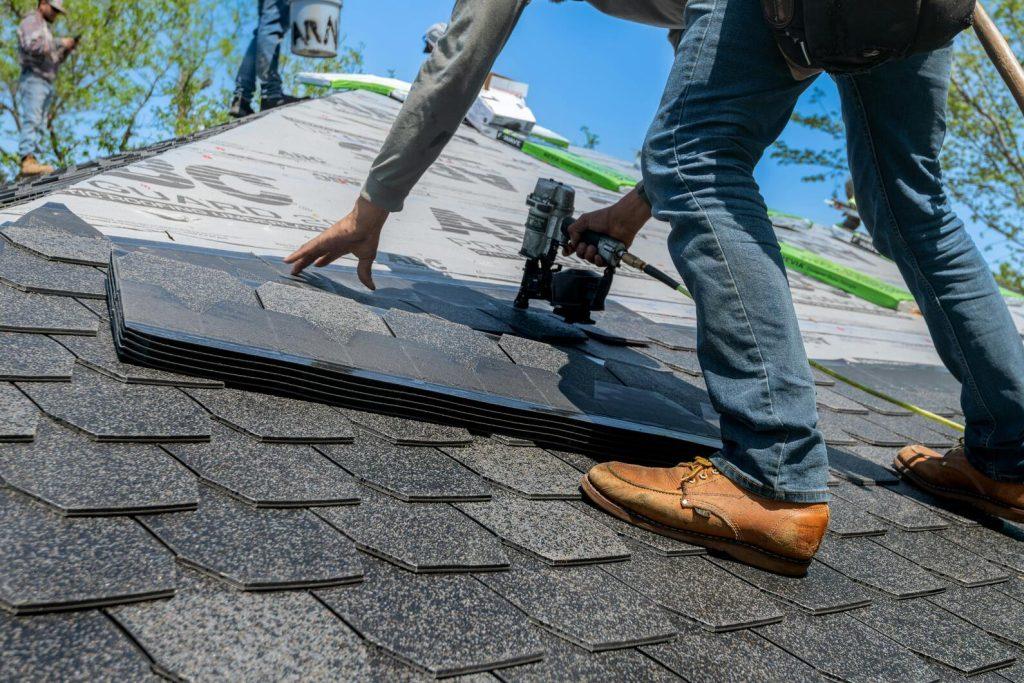
After a major hailstorm rips through Dallas-Fort Worth, they show up within days. Out-of-state license plates. Magnetic signs slapped on pickup truck doors. A clipboard and a hard sell. They promise a free roof, paid for by insurance, and they need your signature right now.
They’re storm chasers — and they’re one of the biggest threats to homeowners in hail-prone Texas.
At StazOn Roofing, we’ve watched these operations roll through DFW for over 45 years. We’ve been called in to fix their shoddy work more times than we can count. And we’ve seen too many homeowners get burned — stuck with a leaky roof, a voided warranty, and a contractor who disappeared back across the state line.
Here’s what every Dallas homeowner needs to know about spotting storm chasers and choosing a roofer who’ll actually be here when you need them.
What Exactly Is a Storm Chaser?
A storm chaser is a roofing contractor — and we use that term loosely — that follows severe weather from city to city, setting up temporary operations to capitalize on storm damage. They descend on a neighborhood after a hailstorm, knock on every door, and pressure homeowners into signing contracts, often with inflated promises about insurance coverage.
The model works like this: they rush through as many jobs as possible while the insurance checks are flowing, then pack up and move to the next storm-damaged city. Quality takes a back seat to volume. Warranty service? Forget it — by the time you discover the issues, they’re working a hail event three states away.
Not every out-of-town contractor is a storm chaser, and not every door knocker is running a scam. But the storm-chasing business model inherently prioritizes speed and volume over quality and accountability. And when it comes to the roof over your family’s head, that’s a dangerous combination.
Red Flags: How to Identify a Storm Chaser
Here are the warning signs that should make you slam the door — or at least pump the brakes:
- Door-to-Door Solicitation After a Storm This is the classic storm-chaser move. Within 24-72 hours of a hail event, they’re walking your neighborhood, clipboard in hand, claiming they “noticed damage” on your roof. Legitimate local roofers don’t need to go door to door after every storm — they already have a reputation in the community and a steady pipeline of referrals. If someone’s knocking on your door unsolicited after hail, be skeptical.
- Out-of-State License Plates or No Permanent Local Address Ask where their office is. A storm chaser will give you a vague answer, a P.O. box, or an address that turns out to be a short-term rental space. A legitimate Dallas roofing company has a physical location — StazOn Roofing has been at 2860 Lombardy Ln, Dallas, TX 75220 for decades. If you can’t visit their office, that’s a problem.
- High-Pressure Sales Tactics “Sign today for a special discount.” “This price is only good for 24 hours.” “Your insurance deadline is coming up — you need to act now.”
Legitimate roofers don’t pressure you. A roof replacement is a major investment, and a reputable contractor wants you to feel confident in your decision. Anyone rushing you to sign without time to check references, verify credentials, or get a second opinion is a red flag.
- They Offer to “Handle Everything” with Insurance Yes, a good roofer helps you navigate the insurance claims process. At StazOn, we assist homeowners with documentation and meeting with adjusters. But storm chasers often cross the line into insurance fraud: offering to “cover your deductible” (illegal in Texas), inflating damage estimates, or promising a “free roof” without actually assessing the damage honestly. If an offer sounds too good to be true, it is.
- No Local References You Can Actually Check Ask for references from jobs completed in DFW in the last 12 months. A storm chaser can’t produce them — or gives you out-of-state references from the last storm they worked. A local roofer should be able to provide multiple local references, ideally including jobs from a year or more ago so you can verify quality over time.
- No Proof of Insurance or Licensing In Texas, roofing contractors are not required to hold a state-issued license — but reputable roofers carry general liability insurance and workers’ compensation. Ask to see certificates. Storm chasers often carry minimal or no insurance. If a worker falls off your roof and the contractor isn’t insured, you could be held liable.
- Vague or Nonexistent Warranty Terms A storm chaser’s warranty is only as good as their willingness to answer the phone next year. They might promise a “lifetime warranty” that’s meaningless because there’s no company backing it. A legitimate roofer offers a real manufacturer warranty (backed by the product company) and a workmanship warranty (backed by their local reputation and longevity).
- They Want Full Payment Upfront Never pay for a roofing job in full before work begins. A reasonable deposit is standard — full payment upfront is a scam. Reputable roofers are paid upon completion or via a structured draw schedule for large commercial projects.
How to Verify a Roofer: Your Due Diligence Checklist
Before you sign any contract, run through this checklist:
* Check GAF Master Elite Certification GAF is North America’s largest roofing manufacturer, and their Master Elite certification is the gold standard. Only 2% of roofing contractors nationally qualify. GAF Master Elite contractors undergo rigorous vetting: they must be properly licensed and insured, maintain a proven reputation, and commit to ongoing training. Why does this matter? Because GAF stands behind the warranty — and GAF isn’t going anywhere.
StazOn Roofing is a GAF Master Elite Contractor, GAF Master Commercial Contractor, and GAF Certified Green Roofer — one of the most comprehensively certified roofing companies in DFW.
* Verify BBB Rating and Accreditation Check the Better Business Bureau at bbb.org. Look for A+ accreditation, read complaints (even good companies have a few — it’s how they handle them that matters), and see how long the company has been BBB accredited. StazOn Roofing holds an A+ BBB accreditation.
* Confirm Years in Business — and Where A company that’s been roofing in DFW for 5 years is different from one that’s been here for 45+. Longevity matters for two reasons: it proves the company does quality work (bad roofers don’t survive four decades), and it means the company will still be here to honor your warranty. StazOn has been family owned and operated in Dallas since 1980.
* Verify Physical Address Look up the address on Google Maps. Is it a real office, or a mailbox store, or a residential address with no signage? Visit if you can. A legitimate roofing contractor has a physical presence.
* Ask for Proof of Insurance Request certificates of liability insurance and workers’ compensation. Call the insurance carrier to verify the policy is active. This takes five minutes and protects you from catastrophic liability.
* Check Online Reviews (with a Critical Eye) Google, Yelp, and the Better Business Bureau are good starting points, but read them carefully. A company with 200 five-star reviews and nothing else may be buying or filtering reviews. Look for a natural distribution — mostly positive, some mixed, an occasional negative with a professional response. That’s a sign of a real business with real customers.
* Ask for Local References Request contact information for three recent DFW clients — ideally including at least one job from 12+ months ago. Call them. Ask about the quality of work, communication, timeline, cleanup, and whether any issues arose after completion.
* Get Multiple Estimates For any significant roofing project, get at least three estimates. This gives you a market baseline and helps you spot outlier pricing — either suspiciously low (cutting corners) or suspiciously high (price gouging). A legitimate roofer encourages you to compare.
Why 45+ Years in DFW Matters
Here’s the thing about storm chasers: they don’t have to live with their reputation. They’re gone before the problems surface. A local company that’s been here since 1980? We’ve built our business on the roofs we’ve installed and the relationships we’ve maintained. Our warranty isn’t just a piece of paper — it’s backed by a physical office, a phone number that’s been the same for decades (214-466-1518), and a family name that’s on the line with every job.
When you hire StazOn Roofing, you’re hiring a company that:
- Has been continuously operating in DFW for over 45 years
- Is still family owned and operated — not absorbed by a private equity rollup
- Maintains a physical office at 2860 Lombardy Ln, Dallas, TX 75220
- Holds GAF Master Elite, GAF Master Commercial, and GAF Certified Green Roofer certifications
- Carries full general liability and workers’ compensation insurance
- Maintains an A+ BBB accreditation
- Serves the full DFW metroplex: Dallas, Fort Worth, Plano, Frisco, Arlington, Garland, Irving, McKinney, Carrollton, Denton, Richardson, Grand Prairie, Mesquite, and beyond
When a storm chaser disappears, their warranty disappears with them. When a StazOn roof has an issue? We answer the phone.
Questions to Ask Before Hiring Any Roofer
Print this list. Ask every contractor you’re considering:
- How long have you been in business locally? (Look for 10+ years minimum; ideally 20+ in a market as competitive as DFW.)
- Are you GAF Master Elite certified? (If they’re not, why not? This isn’t the only certification that matters, but it’s the most rigorous.)
- Can I see your certificate of insurance? (If they hesitate, walk away.)
- What’s your physical office address? (Then verify it.)
- Can you provide three local references from jobs completed 12+ months ago? (Not brand-new jobs where problems haven’t surfaced yet.)
- What warranties do you offer — manufacturer and workmanship? (Get both in writing.)
- How do you handle change orders or unexpected issues that arise during the project? (A professional roofer has a clear process.)
- Who will be on-site supervising my project? (You want a name, not “our crew.”)
- What’s your cleanup process? (Roofing generates debris and nails. A good roofer runs a magnetic roller and leaves your property clean.)
- What happens if I have an issue two, five, or ten years from now? (A local company should be able to answer this confidently.)
The Bottom Line
Dallas-Fort Worth sees its share of severe weather, and after every major hail event, the storm chasers follow. They’re convincing. They’re persistent. And they’re counting on homeowners making a rushed decision under pressure.
Don’t let them win. Take your time. Verify credentials. Get multiple estimates. And choose a roofer with deep local roots — a company that will still be here to stand behind its work 10, 20, or 40 years from now.
If you need a roof inspection after a storm — or if you just want a straight answer from a roofer who’s been serving DFW since 1980 — call StazOn Roofing at 214-466-1518 for a FREE estimate. Family owned and operated. GAF Master Elite. A+ BBB accredited. We’re not going anywhere.
FAQ
Q: What is a storm chaser in roofing?
A: A storm chaser is a contractor who travels to areas hit by severe weather — particularly hailstorms — to solicit roofing work. They typically operate without a permanent local presence, rush through high volumes of jobs, and leave town when the work dries up. This business model often results in poor-quality installations, unenforceable warranties, and no accountability when problems arise later.
Q: How can I tell if a roofer is a storm chaser?
A: Key warning signs include: door-to-door solicitation immediately after a storm, out-of-state license plates, no permanent local office address, high-pressure sales tactics, offers to “cover your deductible” (illegal in Texas), inability to provide local references from past jobs, and reluctance to show proof of insurance. If a roofer can’t demonstrate deep local roots, proceed with extreme caution.
Q: Should I ever hire a roofer who knocks on my door after a storm?
A: Not without thorough due diligence. While some legitimate local roofers do canvas neighborhoods after storms, the door-knocking approach is the storm chaser’s primary tactic. If you’re interested, get their company information, then independently research them before committing to anything. Never sign a contract at the door. A reputable roofer will be happy to give you time to check them out.
Q: What certifications should a reputable Dallas roofer hold?
A: At minimum, look for GAF Master Elite certification (held by only the top 2% of roofers nationally), A+ BBB accreditation, active general liability and workers’ compensation insurance, and manufacturer certifications from the brands they install. StazOn Roofing holds GAF Master Elite, GAF Master Commercial, and GAF Certified Green Roofer designations — a combination few DFW roofers can match.
Q: Why does it matter if my roofer has been in business locally for decades?
A: Longevity proves quality (bad contractors don’t survive 30-40+ years in a competitive market like DFW) and ensures accountability for warranty claims. A roofer who’s been local since 1980 has a reputation to protect and a physical presence you can visit. A storm chaser who appeared last week has neither. When your roof leaks five years from now, you want a company that still answers the phone.
Q: What should I do if I suspect I’ve hired a storm chaser?
A: If work hasn’t started, cancel the contract. Texas law provides a three-day right of rescission for door-to-door sales. If work is in progress or completed and you’re experiencing issues, document everything with photos, file a complaint with the Texas Attorney General’s office and the BBB, and contact a reputable local roofer like StazOn Roofing for an honest assessment of what needs to be fixed.