A roof inspection sounds straightforward — someone climbs up, looks around, tells you what’s wrong. But a professional roof inspection, the kind performed by contractors who’ve been serving Dallas-Fort Worth since 1980, is a methodical process that uncovers problems most homeowners never see until water is dripping through the ceiling. Here’s exactly what happens, step by step, so you know what to expect when you schedule one.
Before Anyone Climbs the Ladder
A quality roof inspection starts with a conversation. The inspector will ask how long you’ve owned the home, whether you’ve had any previous roof work done, if you’ve noticed any interior stains or damp spots, and whether there’s been a recent storm event in your neighborhood. This context guides the inspection. A roof on a house you bought three years ago with no maintenance history gets a different level of scrutiny than a roof that was replaced last spring.
The inspector also reviews the roof’s age, material type, and any documentation you have — previous inspection reports, warranty paperwork, insurance claim records. If you’re the original owner and know the roof was installed in 2012, that’s valuable data. If you’re a recent buyer and the age is unknown, the inspector will spend extra time estimating remaining useful life.
The Exterior Walk-Around
The inspector starts at ground level, walking the full perimeter of your home. This is where they catch issues visible from below that set the agenda for what needs closer examination on the roof itself.
They’ll examine the gutters and downspouts — are they securely attached, properly sloped, and free of granule buildup? Granules in gutters are the earliest indicator of shingle wear, and a heavy accumulation means your roof is shedding its protective surface faster than it should. They’ll check the fascia and soffit boards for rot, peeling paint, or insect damage. They’ll look at siding and brick veneer for stains that indicate water is running behind the exterior cladding from a roof leak.
In Dallas neighborhoods with mature trees — think Lakewood, Lake Highlands, and the Park Cities — they’ll also assess overhanging branches. Limbs that touch or nearly touch the roof abrade shingles in the wind, deposit debris that retains moisture, and provide a highway for squirrels and raccoons looking to get into your attic. Tree trimming might be the cheapest roof maintenance decision you make all year.
On the Roof: The Systematic Survey
Now the inspector climbs up, and this is where the real work begins. A professional inspection isn’t a casual walk — it’s a zone-by-zone survey of every roof plane, penetration, and transition.
**Shingle Condition:** The inspector examines shingles for curling, cupping, cracking, and granule loss. In Dallas, thermal cracking is a common failure mode — the repeated expansion and contraction from hot days and relatively cool nights causes shingles to develop hairline fractures that eventually widen and split. The inspector looks specifically at south-facing and west-facing slopes, which take the brunt of Texas sun exposure and typically degrade faster than north-facing sections.
**Hail and Wind Damage:** The DFW metroplex sees more hail events than almost any major metropolitan area in the country, so impact damage assessment is a core part of every local roof inspection. The inspector looks for hail “hits” — circular areas where granules have been knocked off, exposing the asphalt mat beneath. They check for bruising by running a hand over suspect areas, feeling for the soft, compressed spots that indicate impact damage beneath the surface. Wind damage shows up as lifted, creased, or missing shingles, especially along rake edges and ridges where uplift forces are strongest.
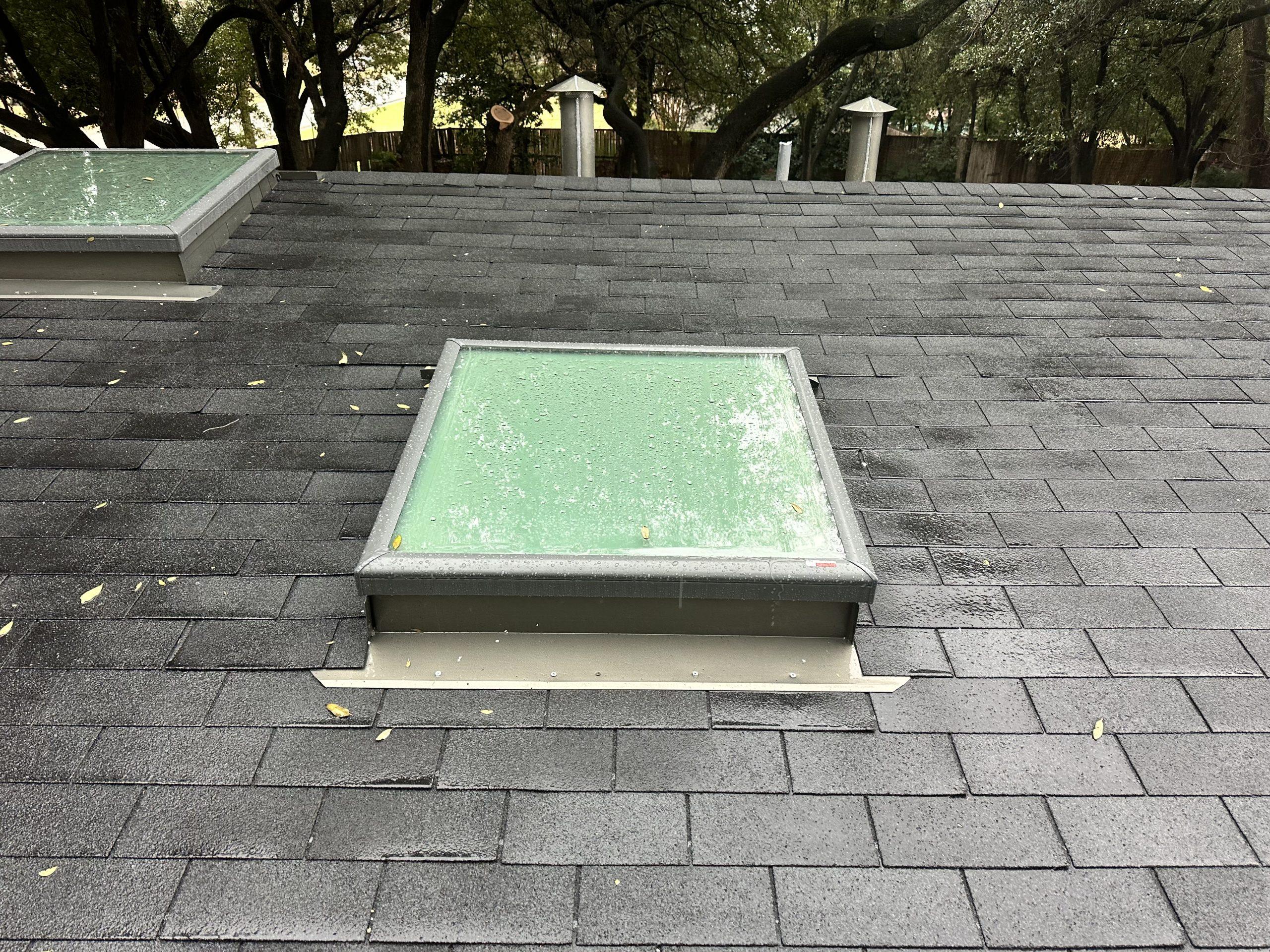
**Flashing at Penetrations:** Every pipe boot, chimney, skylight, attic vent, and exhaust fan represents a hole in your roof, and the flashing that seals those holes is where over eighty percent of residential leaks originate. The inspector checks each penetration carefully. Pipe boots — the rubber collars around plumbing vent stacks — crack and split from heat exposure over time. Chimney flashing, particularly the counter-flashing where the roof meets brick, often separates as the house settles. Skylight seals dry out and leak. These are typically inexpensive fixes when caught early and expensive problems when they’re not.
**Valleys and Transitions:** Roof valleys — where two roof planes meet and channel water — concentrate more water flow than any other part of the roof. The inspector examines valley metal or woven shingle valleys for rust, granule wear, and debris accumulation. The same scrutiny applies to wall-to-roof transitions, dormer intersections, and any point where the roof plane changes direction.
**Ridge Vents and Ridge Caps:** The ridge is the highest point of the roof and where hot attic air exits — or where it fails to exit if ventilation is inadequate. The inspector checks ridge vent material for cracking, checks that ridge cap shingles are properly adhered, and looks for signs that wind has begun lifting the ridge. A loose ridge cap is a liability in North Texas, where spring storms regularly produce sixty-mile-per-hour straight-line winds.
Into the Attic: Where Problems Hide
This is the step that separates a comprehensive inspection from a superficial one. The inspector goes into your attic, and what they find there often contradicts what the roof surface suggests.
**Decking and Structure:** The inspector examines the underside of the roof decking — the plywood or OSB panels that form the structural substrate beneath your shingles. Dark stains, water rings, or visible mold indicate past or active leaks. Soft or delaminating decking means the leak has been active long enough to compromise the wood’s structural integrity. A deck that feels spongy underfoot from the outside corresponds to rot that’s visible from the inside.
**Insulation and Ventilation:** The inspector checks insulation depth and distribution. Inadequate insulation creates hot and cold zones that stress the roofing system. They also check for blocked soffit vents — the intake side of your attic ventilation system. If the soffits are covered by insulation or were never vented in the first place, your attic can’t breathe properly, temperatures spike, and shingle life drops significantly. For homes in Dallas, proper roof maintenance includes making sure your attic ventilation is balanced and functional.
**Fastener Inspection:** From inside the attic, the inspector can see nails that missed the rafters during installation — “shiners” in roofing parlance. These are gaps in the decking that compromise wind resistance. They can also see nails that are rusting, an indicator of persistent moisture that’s condensing on the metal.
**Bathroom and Kitchen Exhaust:** One of the most common attic findings in DFW homes is bathroom and kitchen exhaust fans venting directly into the attic instead of through the roof. This dumps warm, humid air into an enclosed space, where it condenses on decking and framing, promoting mold and rot. It’s a code violation and a fix that pays for itself quickly — especially when you’re already doing roof repair work.
Documentation and Photography
Throughout the inspection, the inspector takes photographs — dozens of them, in some cases. Every finding is documented visually so you can see exactly what the inspector saw. This is critical for insurance claims, for getting competitive bids on repair work, and for your own records. You should never accept a roof inspection that doesn’t include photos.
The Report and Recommendations
Within a day or two of the inspection, you’ll receive a written report. It should include:
- **Property overview:** roof type, estimated age, visible material, general condition assessment
- **Findings organized by priority:** immediate safety concerns first, active leaks second, damage likely to worsen third, and maintenance recommendations last
- **Annotated photographs:** showing exactly where each finding is located
- **Remaining useful life estimate:** how many years before replacement should be planned
- **Maintenance recommendations:** gutter cleaning, tree trimming, sealant replacement, ventilation improvements
- **Repair estimates:** if repairs are recommended, a breakdown of scope and cost
A credible inspector doesn’t push for unnecessary replacement. If your roof has five good years left with targeted repairs, a contractor who’s been serving Dallas since 1980 will tell you that honestly — because replacing roofs that don’t need replacing isn’t how you build a fifty-year reputation.
How Long Does It Take?
A thorough roof inspection on a typical single-family home in Dallas takes between forty-five and ninety minutes, depending on roof complexity, accessibility, and findings. Larger homes, steep roofs, multiple attic access points, and extensive damage findings all extend the time. If someone offers to inspect your roof in fifteen minutes, they’re not inspecting it — they’re estimating it, and that’s a different service entirely.
When Should You Schedule?
In North Texas, the ideal inspection windows are spring and fall. Spring inspections catch winter storm damage before the summer heat accelerates deterioration. Fall inspections — really the sweet spot — identify summer-related thermal damage and give you a clean bill of health heading into winter. That said, any time is the right time if you suspect a problem. If you see a stain on your ceiling, don’t wait for a convenient season. Water that’s inside your house today will do more damage before next week.
The StazOn Difference
StazOn Roofing has been inspecting roofs across Dallas, Fort Worth, Plano, Frisco, Arlington, and the greater DFW metroplex since 1980. As a family-owned and operated, GAF Master Elite contractor — a certification held by only the top two percent of roofing companies in North America — we bring a standard of training and thoroughness to every inspection that most contractors simply don’t match. We go into the attic on every single inspection. We document everything. And we’re honest about what your roof needs — and doesn’t need.
Whether you’re concerned about recent storm damage, planning to sell your home, or simply want to know where your roof stands, a professional Dallas roof inspection is the first step. Call StazOn Roofing today at 214-466-1518 for your FREE estimate — or schedule online. You’ll know exactly what’s happening above your head, and you’ll have a plan to keep it in shape for years to come.